600 South Odessa Ave Egg Harbor City, NJ 08215
Follow Us:

Tag: Treatment

Yin And Yang: The Good In The Bad, The Bad In The Good

When you look at a yin and yang symbol, you see five things. First, you see a black half of a circle. Second, you see a small white circle within that black half. Third, you see the white half of a circle. Fourth, you see a small black circle within that white half. Lastly, you see the cohesive whole, the entire circle with the black half, the white half, the black circle, and the white circle. What you’re looking at is more than a symbol. What you’re looking at is an entire philosophy of life. There is everything and there is nothing. There is nothing in the everything and there is everything in the nothing. Fullness in the emptiness. Sadness in the happiness. The yin yang symbol represents the philosophy that life is incredibly non-dualistic, meaning there is a little bit of something in everything. In the good there is bad and the bad there is good. Everything in life has balance, something that addicts and alcoholics in recovery are constantly striving for.

People in recovery who go to treatment learn a lot in their group therapy sessions, including different problematic thought patterns like black and white thinking. Addiction has a tendency to create an all or nothing mindset which can create issue in other areas of life during recovery. Confronting catastrophic, divided thinking is a journey many in recovery take. We can all learn from the yin yang philosophy and incorporate it into our recovery by first looking at our addiction through this lens.

Our addiction had a payoff, beyond the chemical production of pleasure in our brains. For many of us, addiction was a means of survival. Quite literally, addiction changes the operations of the midbrain, the section of the brain responsible for the operations of survival like eating. Our need for survival went deeper than our basic instincts. A large number of people who become chemically dependent on drugs and alcohol experienced trauma in their lifetime. Drugs and alcohol offered a relief from that trauma. Though addiction can become dangerously “bad” in many ways, it has some “good” because it is helping someone survive- until it doesn’t anymore. As someone hits their ‘bottom’ in addiction, they may feel like they are in one of the worst times of their life. Still, there is good in the bad. This bottom is necessary to bring them to recovery. Recovery is good. As good as recovery is, it still happens to people who have experienced a tremendous amount of bad in their life. Ongoing, we continue to experience both the good and the bad, and each is preparing us for the other, creating the foundation for the comprehensive whole of our lives, the wholeness we have been given only as a result of getting sober.

The best move to make for recovery from drug abuse is the quickest move by calling and asking for help immediately. Recovery is possible and healing will take place in mind, body, and spirit. Enlightened Recovery Solutions offers a holistic based, 12-step inspired, clinically proven program for alcoholism and co-occurring disorders. Call (844) 234-LIVE today for information on our partial care programs.

Dance Therapy? Yes You Can

“I don’t dance, don’t ask me, I won’t dance, don’t ask me, I won’t dance, Madame, with you.” These words sung by Frank Sinatra have become an anthem of sorts for the millions of people who refuse to dance. People who don’t, won’t dance, have plenty of reasons as to why they don’t dance. They don’t have any rhythm. They are too embarrassed. They don’t like to dance. The truth is that dancing is innate in everyone’s ability and humans were born to dance.

Humans have been dancing for thousands and thousands of years. Movement and rhythm have been part of ritual celebrations for civilizations and cultures starting back to the very beginning of mankind. Even if a human claims not to have any rhythm, they dance in their everyday lives. Dancing is nothing more than movement. Movement is something our body is doing every single second of the day at varying rhythms. Our eyes move. Our lungs expand and deflate with the breath. We move our feet, our legs, our hips, our core, and dozens of other muscles in our bodies all day long. Dancing is simply taking those movements, focusing on them, and exaggerating them. You don’t have to be a professional or even have skill to dance. All you have to do is move.

Movement therapy is important for those in recovery from addiction and alcoholism. The disease of addiction weakens the body as well as the spirit. People can become extremely sedentary as a result of their addiction which not only isolates their physical life but their personal, internal life as well. Movement is an expression of the self. Not moving, like not getting off the couch because of intoxication, inhibits personal expression. The more someone sits still, the more they become locked in themselves, lost inside. Movement creates a synergy between the external self- the muscles- and the internal self- the personal self.

Dancing doesn’t have to be anything more than standing up and moving around to music. You don’t even need music. You don’t even need a beat. You just have to get up and move. Movement breaks up stagnant energy in the muscle, as well as stagnant energy from your personal life flow. We need to move in recovery because recovery is about taking action. Recovery doesn’t just happen. Recovery has to be dynamic and with it, we have to move dynamically, through dance or any other physical expression.

The best move to make for recovery from drug abuse is the quickest move by calling and asking for help immediately. Recovery is possible and healing will take place in mind, body, and spirit. Enlightened Recovery Solutions offers a holistic based, 12-step inspired, clinically proven program for alcoholism and co-occurring disorders. Call (844) 234-LIVE today for information on our partial care programs.

How You Can Celebrate The Earth This Earth Day On April 22

If you’re feeling anxious about the marijuana-laden “420” celebration coming up on April 20th, you can skip that holiday and head straight toward Earth Day, happening on April 22nd. Earth day is a planet wide celebration honoring our beloved blue ball which we call home. Recovery can give you a lot of perspective, including a whole new view on the way you relate to the planet. In recovery, you learn to look at your body like your home. By holistically connecting with your body, you learn how drug and alcohol abuse damages that home. Self-care is how you learn to respect, honor, and nourish your body instead of harming it. The same lessons apply to planet earth as you realize that every part of your life is in a way your home. Each part of your life, like the planet you live on, deserves the same conscious, humble respect as your physical form. Earth day is the perfect opportunity to put some of your recovery tools into practice for making changes, getting grounded, and celebrating life.

Get more eco-friendly

Thankfully, it is easier today than ever to live a more eco-friendly life on a budget. Shop for “green” and eco-friendly products made with recycled materials, sustainable practices, and non-toxic chemicals. Ditch your harmful toxins and chemicals safely. Opt for more sustaianable and reusable products instead of plastics and harmful chemicals. Introduce more solar to your house where possible and put mindfulness notes over the light switches to remind yourself to turn lights off. You can do simple things like switch all of your bills to email in order to reduce paper, and much more.

Ditch plastic for a day, or a year

Plastic is one of the biggest threats to our planet. Finding reusable products not made of plastic is the perfect antidote. Look for glass products that help you reuse, like glass straws and glass storage containers for the kitchen. Use reusable grocery bags instead of paper or plastic ones.

For all of the plastic and paper you do end up using at home, set up a recycling system. Recycling can be more than paper and plastic. Set up a can for aluminum, glass, paper, and plastic. Make it part of your regular routine to take recycling to a donation center.

Plant a garden and get dirty

Even if you don’t have a backyard or a balcony, you can still get your hands in the dirt, or bring some earthly greenery into your home. Succulents are the easiest plants to tend for and don’t require much attention. Keeping a small herb garden is easy and makes your cooking more delicious than ever. Plenty of devices exist for growing small vegetables and fruits in your house as well. You can even buy a countertop composter for collecting food waste and turning it into rich soil for your plants.

Spend time outside

The best way to celebrate Earth day is by connecting to the earth. Get outside, kick off your shoes, and sink your toes into something natural. Take a walk, take a hike, lay in the grass, or swim in some natural water. Bring your mindfulness tools with you and notice all of your senses as you connect to the Earth. You’ll notice that your sympathetic nervous system slows down, you feel more relaxed, and you feel more at ease. Being a human on earth is a gift. Being a sober human on earth is even better.

The best move to make for recovery from drug abuse is the quickest move by calling and asking for help immediately. Recovery is possible and healing will take place in mind, body, and spirit. Enlightened Recovery Solutions offers a holistic based, 12-step inspired, clinically proven program for alcoholism and co-occurring disorders. Call (844) 234-LIVE today for information on our partial care programs.

Everything You Need To Know About Surviving Your First 420 In Sobriety

It shouldn’t seem like a big deal. You’re in recovery now. You’ve chosen to leave all drugs and alcohol behind. Likely, you haven’t even cared about the drug-saturated ‘holiday’ of April 20th. Or, perhaps, it was one of your favorite days of the year because marijuana was your substance of choice. Anyone who has altered their brain chemistry as a result of drug and alcohol abuse feels triggered, even in the slightest degree, by holidays which are associated with substance abuse. In the first year of recovery, April 20th, or “420” can be a difficult day to get through as millions of people around the world excessively indulge in marijuana intoxication. Learn the history of the holiday, understand the reality of marijuana addiction, and detach yourself from the fear of missing out. When you’ve finally found recovery and you’re saving your life on a daily basis, you’re not missing anything when it comes to drugs.

The History Of 420

“420” is a widely used code word for marijuana. People celebrate the April 20th holiday. They call marijuana “420” or will describe their homes as “420 friendly”. Every day at 4:20pm it is considered a universal time to smoke marijuana. Marijuana history is clouded at best, due to the fact that marijuana does, in fact, kill brain cells. Origins of “420” have been hard to trace, but many believe the term is an evolution of a police code once used for “Marijuana Smoking in Progress”. The Huffington Post detailed an intensive history on the origins of the 420 code in “420 History: The Story Behind April 20 Becoming ‘Weed Day’”. According to the author, the term started with a group of San Rafael, California teenagers on the hunt for a field of marijuana plants and evolved through nothing other than the Deadheads following The Grateful Dead and made its mark in High Times magazine. Now it is a worldwide phenomenon.

Marijuana Addiction Is Real

The marijuana of today is nothing like the marijuana teenagers were smoking in the 60s and 70s. Marijuana today is intentionally and scientifically bred to be as intoxicating as possible. As a result, marijuana has become an addictive substance. Considered the ‘holy bible’ of mental health diagnostic information, The Diagnostic and Statistical Manual of Mental Disorders recognizes “marijuana use disorder” as a substance use disorder, or an addiction. Marijuana has been proven to halt psychological development, inhibit the brain from physically growing, and damage the prefrontal cortex. Though marijuana addiction is deadly and life threatening like heroin addiction, for comparison, being addicted to marijuana can greatly reduce quality of life. People lose jobs, friends, relationships, physical health, and mental health due to marijuana addiction. Additionally, people who become chemically dependent on marijuana experience extremely uncomfortable symptoms of withdrawal and detox.

You’re Not Missing Out

You may feel as though everyone else gets to celebrate something on 420 and you’re missing out on it. As someone in recovery, you are celebrating every single day because your life is no longer being controlled by addiction.

The best move to make for recovery from drug abuse is the quickest move by calling and asking for help immediately. Recovery is possible and healing will take place in mind, body, and spirit. Enlightened Recovery Solutions offers a holistic based, 12-step inspired, clinically proven program for alcoholism and co-occurring disorders. Call (844) 234-LIVE today for information on our partial care programs.

Fourth Step: Do A Spring Cleaning Inventory

Spring cleaning happens every year for a reason. Throughout the year you’ve accumulated stuff. Most often, we don’t realize how much stuff we’ve accumulated until we start going through our stuff and take an honest inventory of all the stuffy we have. Typically, we are surprised by our amount of stuff. How and when did we accumulate all of these things? Now that we can see them, how is it that we were ever living with this much stuff? Earnestly, we embark on spring cleaning to rid ourselves of as much unnecessary stuff as possible. Getting rid of our stuff, we tidy up and organize the stuff we do have, vowing to appreciate it more. We won’t take on anymore stuff, we promise ourselves. Yet, each spring we do another cleaning, getting rid of more stuff.

Addicts and alcoholics in recovery have a lot of stuff. Not necessarily material stuff, but emotional stuff, psychological stuff, spiritual stuff, and trauma stuff. Primarily, addicts and alcoholics accumulate resentment stuff, the tiny little chips on the shoulder which become icy blocks and turn into craters. Resentment stuff gets in the way of living life functionally, just like too much stuff in our household gets in the way of living life functionally. Thankfully, the founders of Alcoholics Anonymous provided a solution in the fourth step. Made a searching and fearless moral inventory of ourselves is the text of step four in the twelve steps of AA, or any other twelve step program. The fourth step asks us to make a list of our stuff, the stuff we’ve held onto for so long, the stuff that has held onto us.

Some people work the steps every year focusing on one step per month, as the AA approved Daily Reflections does. April is the fourth month of the year, making it the perfect time of year to do a fourth step as a mental and emotional spring cleaning. Taking honest stock of our stuff requires two things. First, being willing to look at all of that stuff and where it came from. Two, being willing to let go of that stuff. Then, there is a bonus requirement. We have to take responsibility, to an extent, for that stuff. Not all of our stuff belongs to us, in fact, most of it doesn’t. For the stuff that does, however, we have to take accountability for it. Along the way we learn about ourselves, find room for improvement, and continue on our journey.

Recovery is a journey, one that asks us to continually grow and evolve. An annual or regular fourth step is one of our many tools for finding where our transformation can take place.

The best move to make for recovery from drug abuse is the quickest move by calling and asking for help immediately. Recovery is possible and healing will take place in mind, body, and spirit. Enlightened Recovery Solutions offers a holistic based, 12-step inspired, clinically proven program for alcoholism and co-occurring disorders. Call (844) 234-LIVE today for information on our partial care programs.

The Most Severe Long Term Effects Of Meth Addiction

When it comes to substance abuse disorder (SUD), struggling with methamphetamine (meth) addiction brings forth the harsh reality of the long-term effects of meth. There is no sugarcoating the fact that meth is extremely dangerous, highly addictive, and destructive to the lives of those who use it. At Enlightened Solutions, we understand these challenges and guide individuals toward lasting recovery. 

Unfortunately, thousands of Americans are affected by meth yearly. The Center For Disease Control (CDC) estimates that 2 million people (aged 12 and up) use meth daily, while over 500 people each day try meth for the first time. 

Whether they are using meth themselves or suffering the consequences of someone else in their lives who is using the drug, the repercussions are never good. 

The long-term effects of methamphetamine inevitably alter and damage lives over time.

What Exactly is Meth?

In simple terms, meth is a synthetic drug often made using ingredients found in cold and allergy medicines, like pseudoephedrine or ephedrine. 

These ingredients are combined with dangerous chemicals like ammonia and hydrochloric acid. This process is illegal and highly hazardous due to the risk of explosions and toxic fumes.

The process of making meth itself is hazardous. Many substances used in its creation are flammable, toxic, and even explosive. Many people die making meth due to fire, explosion, suffocation, and exposure.

Meth is typically taken by smoking, snorting, injecting, or swallowing the drug to produce a powerful and euphoric stimulant effect. 

Those who inject meth damage their veins, are at increased risk of infections, and cause a great deal of damage to their physical health.

Since meth is so highly addictive, an addiction can take hold after using the drug just one or two times.

Besides the obvious dangers of making and using meth, the long-term effects are ugly and terrifying. Those on meth often cannot sleep for days or weeks, leading to mental and physical health problems.

Hence, the cycle of sleep deprivation followed by a debilitating crash experienced by meth users paints just part of the picture.

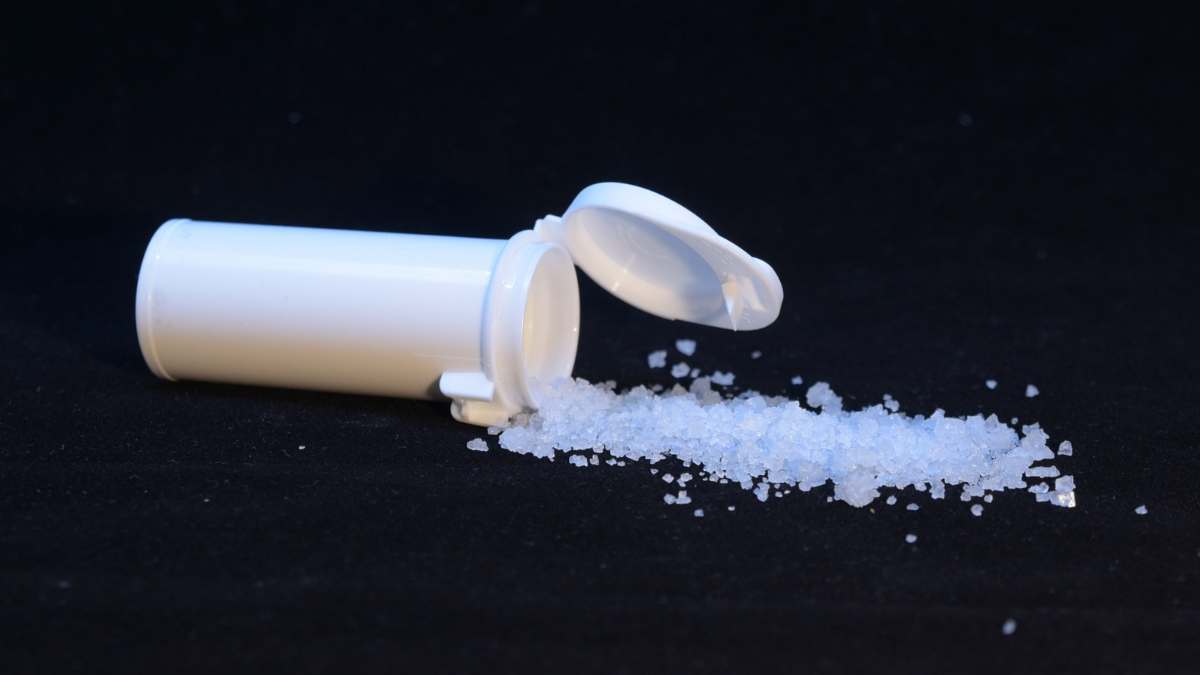
Small bottle of crystal meth. The long-term effects of meth addiction require effective detoxification in a rehab center.

Long-Term Effects of Methamphetamine Use

Drug-induced insomnia causes delusions, hallucinations, and psychosis. These often lead to risky behaviors without regard for their safety or those around them. 

Meth is also an appetite suppressant, leading to dramatic weight loss and malnutrition. Many who become addicted to meth initially took the drug to lose weight quickly.

Additionally, open sores and skin infections are common, as meth users often scratch and dig at their skin.  

One of the most common and ugliest effects of long-term methamphetamine use is ”meth-mouth.” Users who choose to smoke crystal meth are regularly inhaling a concoction of chemicals which significantly reduces oral health. Meth blasts through the enamel and gum lining, creating rotted teeth and gingivitis. 

Staying awake in a blackout for potentially weeks at a time, a side effect of meth can also result in neglecting dental practices.

Signs and Symptoms of Long-term Meth Use

Knowing how to spot the physical and psychological symptoms of meth addiction is crucial for effective detox and supporting yourself or a loved one with an addiction.

Signs and symptoms of meth use include: 

  • Delusions
  • Paranoia
  • Insomnia
  • Irritability 
  • Open wounds
  • Itchy skin
  • Scabs and sores
  • Erratic behaviour
  • Urge for lots of caffeine
  • Weight loss
  • Excoriation disorder (skin picking)
  • Anxiety
  • Rotting or loss of teeth (due to meth mouth)
  • Loss of interest in once-enjoyed activities
  • Convulsions
  • Premature aging
  • Abnormal skin pallor
  • Depression
  • Intense cravings 

Severe Long-Term Effects of Meth

Continued meth use inevitably leads to more severe physical and mental health effects, such as:

  • Seizures
  • Loss of teeth due to meth mouth
  • Aggressive, erratic, violent behavior
  • Acts of crime (robbing and stealing to get drug money)
  • Permanent organ damage (heart, brain, liver, kidney and lungs)
  • High blood pressure 
  • Heart attack and stroke
  • Psychosis (paranoia, hallucinations, delusions) lasting for months and years.
  • Frequent infections from weakened immune system.
  • Damage to blood vessels
  • Impaired motor skills
  • Prolonged depression
  • Suicidal tendencies

Lastly, meth abuse can “and does” result in death. The CDC reports meth overdoses have shot significantly in the past decades.

Medical specialist talking to a young man about the long term effects of meth addiction in a consulting room.

Reach Out for Meth Addiction Help Today

The increasing rates of meth abuse, addiction, and overdose deaths underscore its troubling and persistent impact in the United States. Meth use is hard on the user, those who love them, and the entire community.

Recovery begins with you. Getting help for the long-term effects of meth addiction is the courageous first step needed to reclaim your life.

Let Enlighted Solutions guide you on your journey to a healthy, addiction-free life. Our compassionate team provides spiritual care and holistic treatments, combining evidence-based clinic care, proven alternative healing practices, and a solid 12-step philosophy.

A life addicted to meth is not living. The power to heal is yours, and we’re here to help you every step of the way.

Contact us today for meth addiction treatment and to start healing from meth use and the long-term effects of methamphetamine addiction.

Why You Should Start A Meditation Practice This Spring

Spring cleaning is a major part of the spring season and cleaning out stress from your mind and body should be a part of that process. Meditation is more than a trending buzzword in the Western world. Eastern cultures and ancient religions have been practicing some form of meditation for thousands of years. Today, meditation is recognized as a period of time dedicated to focused breathing while trying to calm the mind. Meditation does not necessarily mean clearing the mind to nothingness, as Zen meditation suggests. Acknowledging your thoughts and learning to release your attachment to those thoughts is a more widely accepted approach to meditation called mindfulness.

Both mindfulness and meditation have been intensely studied in recent years as they have gained popularity in Western culture and treatment. Volumes of research studies have concluded that mindfulness meditation is extremely beneficial to the mind and body. Some studies have gone so far as to suggest mindfulness meditation can be a replacement to other treatment methods often relied upon. For those in recovery from drug and alcohol addiction, mindfulness meditation is strongly suggested as part of a personal program of recovery for stress management. Stress is the number one underlying cause of relapse. In recovery, stress can come in many different forms and trigger the recovering brain’s most familiar stress response: drug and alcohol abuse. Research has proven that mindfulness and meditation can reduce stress on a molecular level, ridding the body and the brain of the harmful effects stress creates.

Spring is the perfect time to start a meditation practice because of the thematic focus on cleaning out, renewal, and starting fresh. Meditation is like a spring cleaning for your mind, body and spirit every day. Science has proven that just five minutes of meditation can leave you feeling better, more relaxed, and stress free. As a result, meditation helps you feel refreshed and renewed. Try taking a few deep breaths right now. Stop all your thinking and analyzing for one second, right now, close your eyes, and focus all your attention on a deep inhale, a quick pause, and a large exhale. You may not believe it, but the very molecules in your DNA are already feeling better.

The best move to make for recovery from drug abuse is the quickest move by calling and asking for help immediately. Recovery is possible and healing will take place in mind, body, and spirit. Enlightened Recovery Solutions offers a holistic based, 12-step inspired, clinically proven program for alcoholism and co-occurring disorders. Call (844) 234-LIVE today for information on our partial care programs.

5 Ways To Open The Heart Chakra

Opening our chakras and making sure our energy flows effortlessly through them is not a one time spiritual surgery. Our recovery is a daily program of maintenance. Included in that program is living a holistic lifestyle which supports a healthy flow of energy through open chakras. If you have noticed that your heart chakra seems blocked, there are activities you can incorporate into your life which will contribute to opening that sacred energy channel and allowing the flow of the universe to run through you once more.

Chest-opening yoga poses

Yoga can be focused on opening specific chakras, like the heart chakra. Since the heart chakra sits in the chest area of the body, look for chest-opening yoga poses. You don’t have to do a full yoga class to get heart-chakra opening benefits, though they do exist. Simply do an internet search for chest-opening yoga poses, or, heart-chakra opening yoga poses and you will be met with many options to create your own flow or just practice individual asanas. For an easy stretch, simply tilt your head back and push your chest forward, rolling your shoulders back. Mindfully focus on this practice a few times a day to start releasing tense chest muscles.

Heart chakra-focused meditation

Each chakra has a mantra associated with it. The mantra for the heart chakra is YAM. Many meditations exist online which guide you through visualization practices for opening and balancing the chakras. On your own, you can practice taking deep inhales and on your exhales, sounding out the YAM mantra, like you would do with OM.

Color therapy

Green is the color of the heart chakra. Color therapy can range from incorporating a color into your wardrobe, carrying more stones of a color, or even cooking with that color. Green is an especially healing color because it is a color of nature. Spend time in green spaces or buy plants for your home. Cook with lots of green ingredients like leafy greens, green vegetables, and green fruits. Make green smoothies, green soups, and green sauces. Try some art therapy using only green shades of mixed media. In all of the things you do, set your intention and energy toward your heart chakra.

Sound therapy

Did you know that sounds have frequencies and that chakras have frequencies? Sound frequencies can be tuned to match the frequency of the chakras. Tibetan singing bowls or crystal bowls, for example, can be constructed in a way which tunes them specifically for the heart chakra. There are also songs and recorded meditations which include heart chakra frequencies.

Reiki

Reiki is an energy healing practice which focuses on removing blockages from the chakras and helping enhance the flow of energy. A reiki practitioner will likely be able to tell that your heart chakra is blocked. However, you can let them know this is what you specifically want to work on and they can focus on your heart chakra.

The best move to make for recovery from drug abuse is the quickest move by calling and asking for help immediately. Recovery is possible and healing will take place in mind, body, and spirit. Enlightened Recovery Solutions offers a holistic based, 12-step inspired, clinically proven program for alcoholism and co-occurring disorders. Call (844) 234-LIVE today for information on our partial care programs.

More Surprises About Sobriety You Won’t See Coming

Sobriety is a daunting intimidation at first. Everything in an alcoholic’s life depends on alcohol. The thought of living without alcohol is frightening. Living in sobriety is full of wonderful surprises that eventually lead a recovering alcoholic to wonder why they ever drank in the first place.

People really don’t care that you don’t drink anymore!

The disease of alcoholism tends to create a very self-centered selfish way of thinking. For recovering alcoholics, there is a bit of the chicken or the egg debate. Did a self-obsessed person create the alcoholism or did the alcoholism create a self-obsessed person? Defining self-obsession in regards to alcoholism is complex because it is not the overtly narcissistic kind of indulgence. Instead, it is masked in behaviors like insecurity, self-consciousness, codependency, low self-esteem and other character deficiencies which appear to be about others. Consequently, someone entering recovery from alcoholism will be concerned about what people will think. Remarkably, most people will not really care that you don’t drink anymore. In fact, most people will be relieved that you don’t drink anymore and will encourage your sobriety fully. The people who do seem to care and give you a hard time about your abstinence A) don’t have your best interest in mind and B) are probably triggered by your sobriety because they have a drinking problem themselves. Recovery is about dropping what no longer serves you. Pay attention to the friends who celebrate your recovery and the people who criticize your recovery. Be willing to let go of the friendships which hold you back.

You are more yourself than you ever were drunk!

I don’t know who I am without alcohol, is a thought many in recovery have had. Alcohol becomes more than something we do. For most men and women in recovery, alcohol is a part of who they are and even defines their personality.

Feeling comfortable in your own skin takes time in recovery. You’ve lived years as someone else, someone who was dictated by alcohol. There are parts of yourself you may not have ever encountered which you are meeting for the first time in recovery. Discovering yourself can be an awkward journey. With each step, you are realizing that who you are is great and you don’t need alcohol to make you any more fabulous than you already are.

The best move to make for recovery from drug abuse is the quickest move by calling and asking for help immediately. Recovery is possible and healing will take place in mind, body, and spirit. Enlightened Recovery Solutions offers a holistic based, 12-step inspired, clinically proven program for alcoholism and co-occurring disorders. Call (844) 234-LIVE today for information on our partial care programs.

Things You’ll Be Surprised By After Getting Sober

Sobriety can’t possibly be as great as people say it is, we think to ourselves. Nobody could be that happy without alcohol. Sobriety is full of surprises. Here are just a few of them you can look forward to.

You can still have fun!

One of the first thoughts most people trapped by the disease of alcohol think to themselves when they are presented with the prospect of getting sober is: how can I have fun without alcohol? By the time someone needs to go to treatment for an alcohol problem, it is likely they haven’t really had fun in a while, at least not while under the influence of alcohol. Unfortunately, alcohol impacts the memory systems in the brain, creating an intricate association between pleasure and the consumption of alcohol. Essentially, the brain forgets that fun exists without alcohol and panics that there will never be any pleasure without alcohol.

Having comfortable, free flowing, unbridled fun in sobriety can take some time because you have to learn how to have fun again without the assistance of mind altering substances. Within a few months, however, you’ll find that you can still have fun without alcohol. You laugh a little harder. You smile a little bigger. Your senses pick up on things you haven’t picked up on in a long time. It turns out alcohol isn’t very much fun at all. The farther away you get from your last drink, the less fun all that intoxication seems.

You can even go to places where they serve alcohol!

Alcoholics Anonymous also known as “The Big Book” writes that an alcoholic can do any number of things an alcoholic isn’t supposed to do as long as they are spiritually fit. There are conditions of life every single day which pose a threat to our sobriety, if we allow them to. “An alcoholic who cannot meet [these conditions], still has an alcoholic mind; there is something the matter with his spiritual status.” Recovery is not meant to be a prison cell built with different bars. Getting sober means getting liberated from a life of limitations caused by alcohol. You can go anywhere and do anything you set your mind to, as long as you are conceded to your innermost self that you are alcoholic and that picking up that first drink is never the solution.

You don’t miss alcohol as much as you thought you would!

Everyone has the same thought when they get sober: how can I live without drinking? Turns out you don’t miss it. In a short amount of time, the good in your life of sobriety greatly outweighs any good alcohol brought into your life. All of your training, education, and therapy in treatment really helped you comprehend the fact that alcohol abuse is a coping mechanism. Treatment gave you a whole library of new coping mechanisms that are healthier and make you happier. You recognize that your cravings for alcohol all have a complex network of associations, which you can see clearly. More importantly you’ve realized that there’s nothing worth drinking over and that makes you miss alcohol even less. What you do miss about alcohol can still be traced back to a tangible set of tools you can use to improve your life by yourself without external substances like booze.

The best move to make for recovery from drug abuse is the quickest move by calling and asking for help immediately. Recovery is possible and healing will take place in mind, body, and spirit. Enlightened Recovery Solutions offers a holistic based, 12-step inspired, clinically proven program for alcoholism and co-occurring disorders. Call (844) 234-LIVE today for information on our partial care programs.

Contact Us

We are here to help. Contact us today and get the answers you need to start your journey to recovery!

  • Discuss treatment options

  • Get help for a loved one

  • Verify insurance coverage

  • Start the admissions process

Get In Touch

Fill out this form and we’ll respond to your message

    This site is protected by reCAPTCHA and the Google Privacy Policy and Terms of Service apply.

    You Have Any Questions?

    • Don't hesitate to contact us or visit our clinic.


    Copyright © 2025 Enlightened Solutions | All Rights Reserved